The Financial District and Seaport Climate Resilience Master Plan is the final link in New York’s Lower Manhattan Coastal Resiliency (LMCR) effort to protect the city from tidal flooding and coastal storms. The comprehensive vision leverages the need for coastal flood protection to transform one mile of lower Manhattan’s most complex and valuable shoreline into a resilient and dynamic waterfront for the next generation of New Yorkers.
With limited room at the water’s edge to integrate new flood defense without walling off the city from the water, the city’s Plan proposes a bold solution—extend the shoreline into the East River by up to 200’ to accommodate the flood defense within 8 acres of new waterfront open space.
Cultivating a City-Community Vision
Critical to the Plan’s success is the cultivation of a diverse coalition of support from community members, City agency partners, ferry operators, maritime users, environmental advocates, historic stewards, and other key stakeholders such as the Climate Coalition of Lower Manhattan (CCLM).
During the most recent phase of work, MNLA played a critical role in leading the strategy and execution of a broad-reaching community engagement effort aimed at increasing awareness, gathering input, and building the support that will be necessary to carry momentum for the long-term vision of the project forward through future phases.
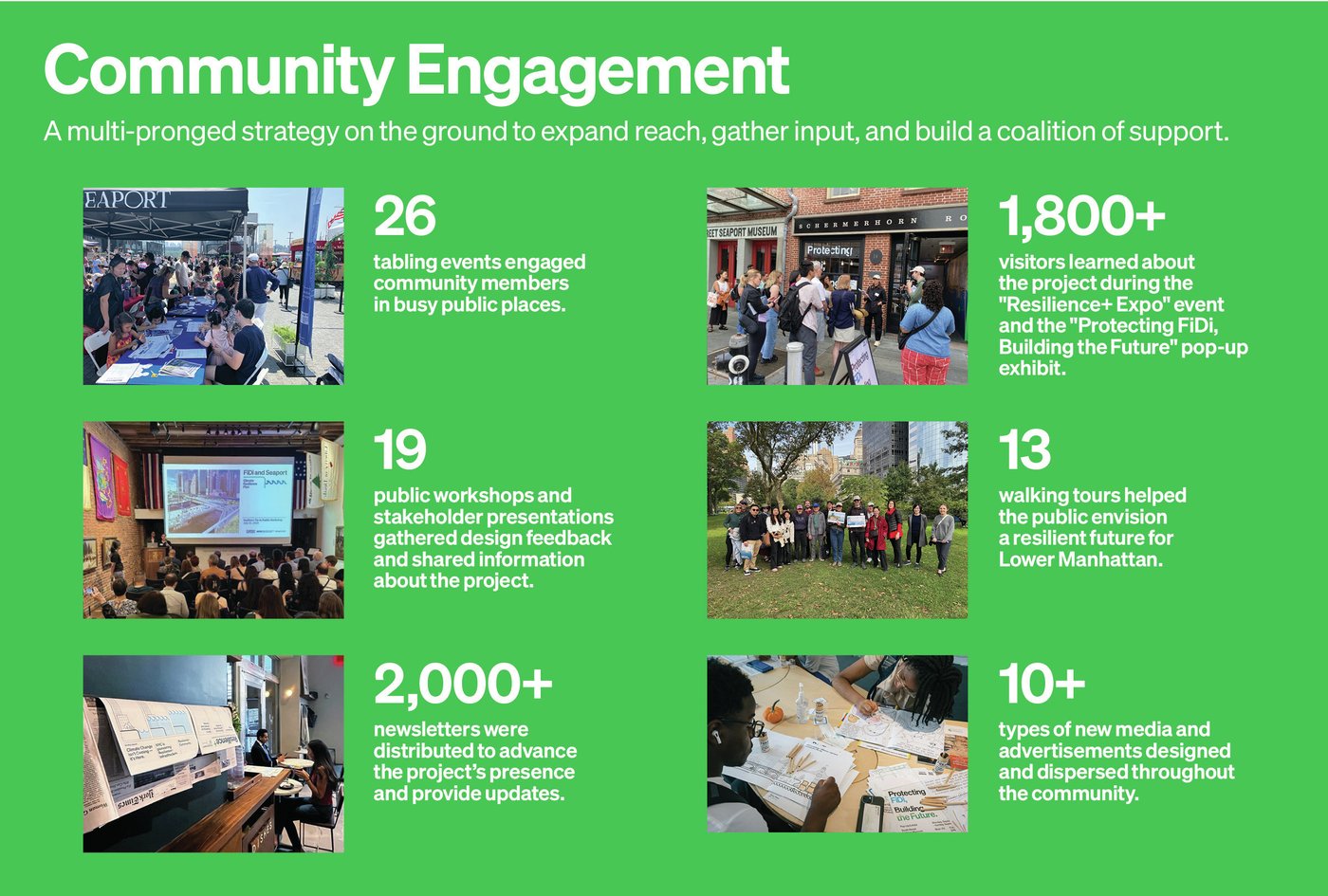
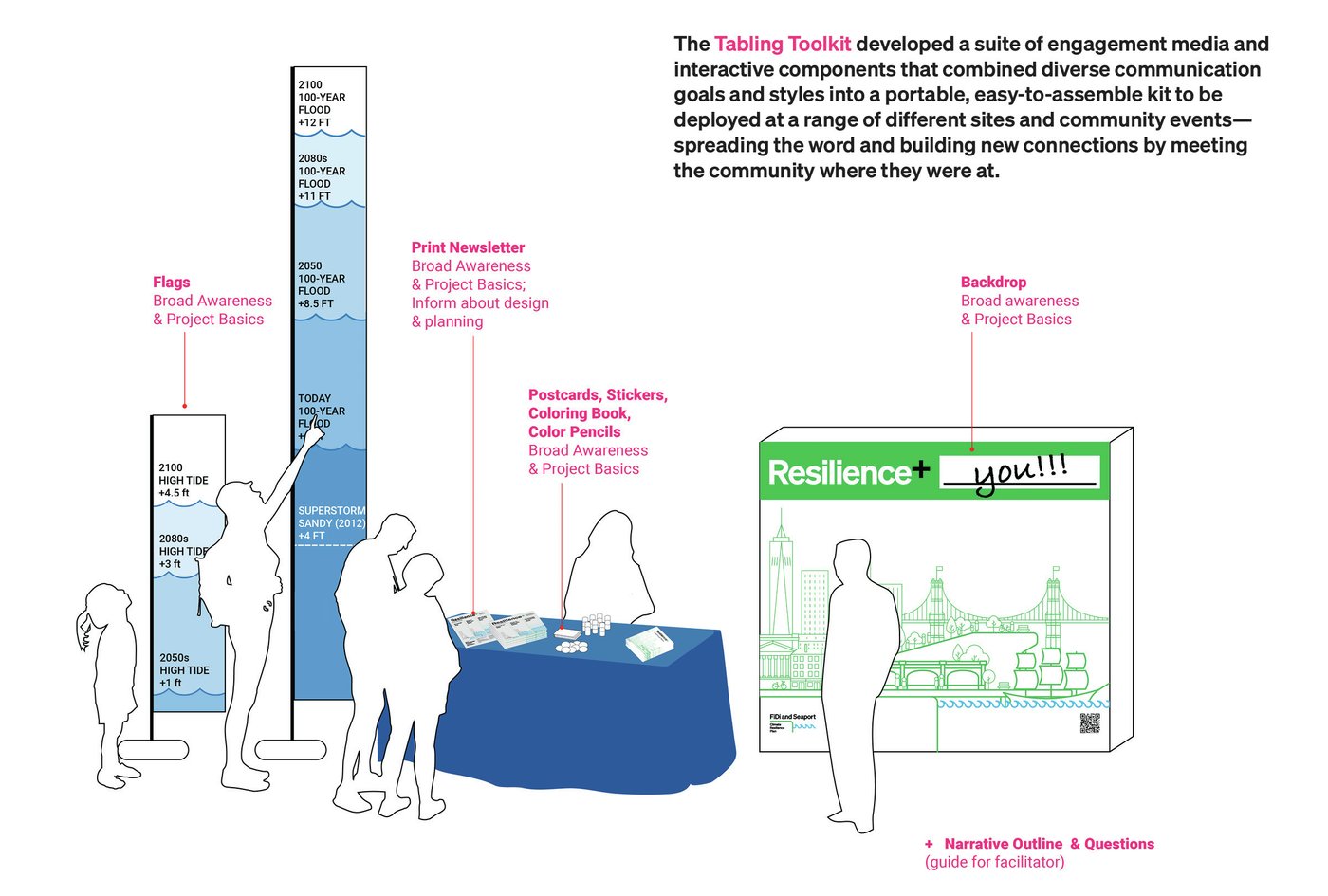
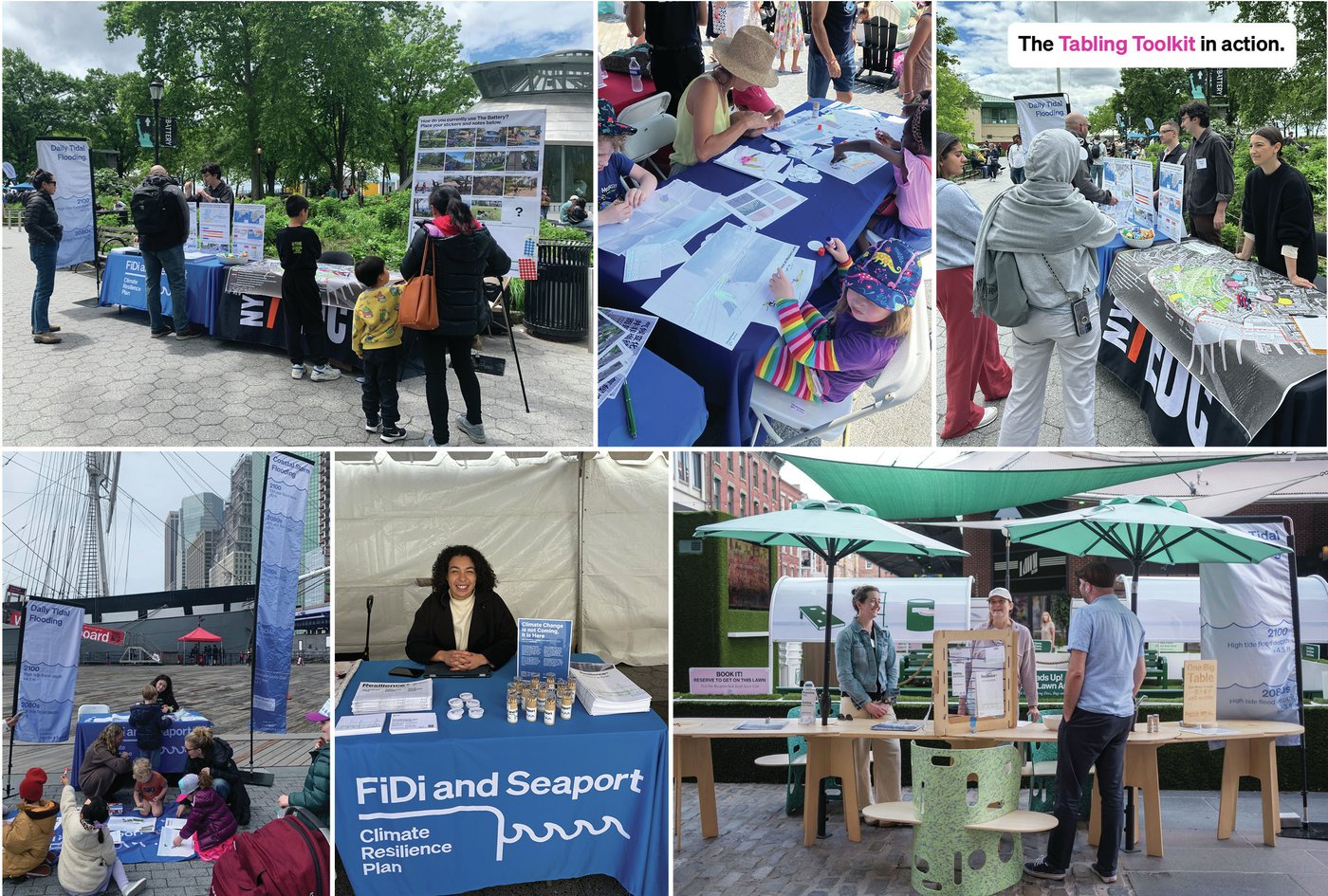
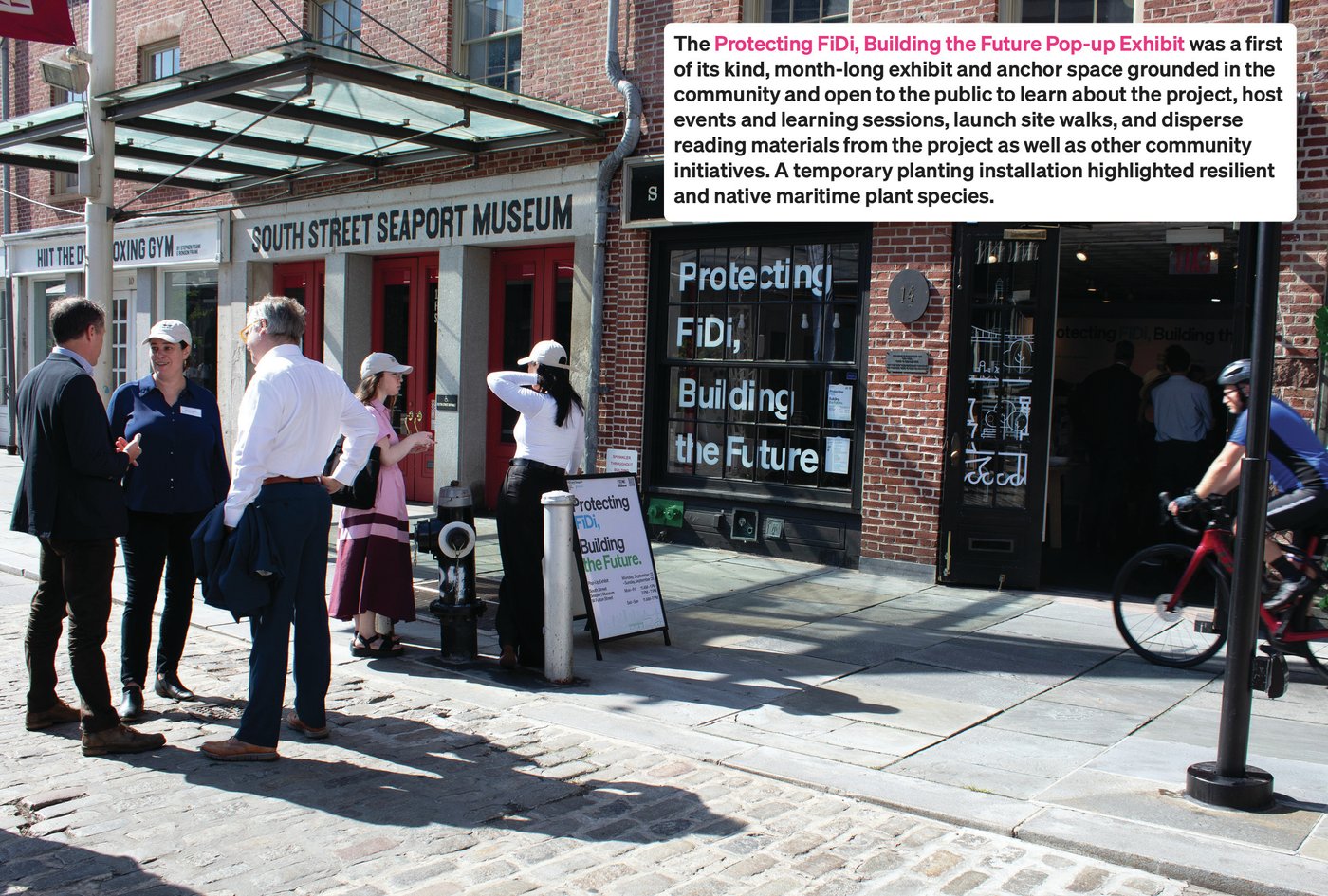
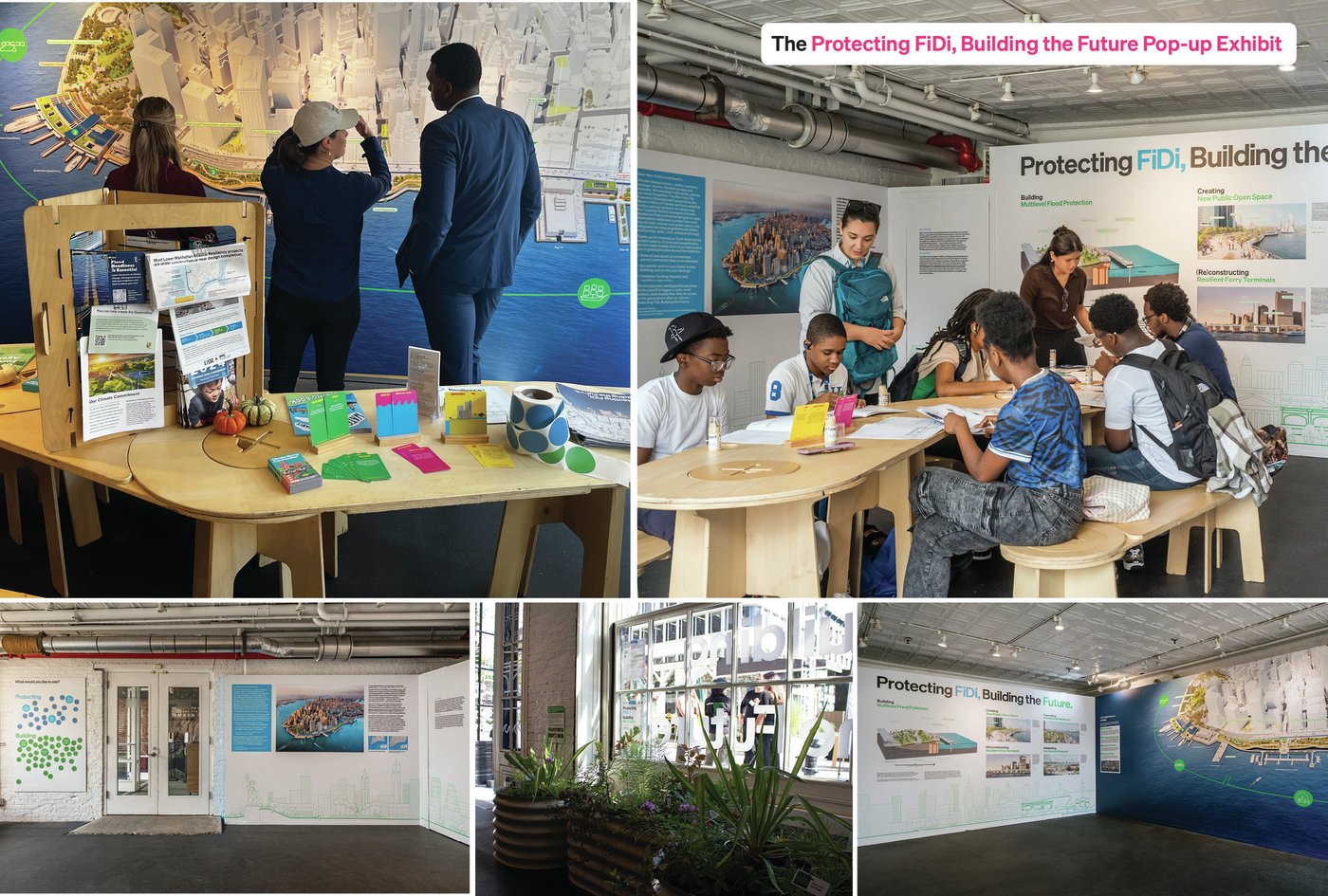
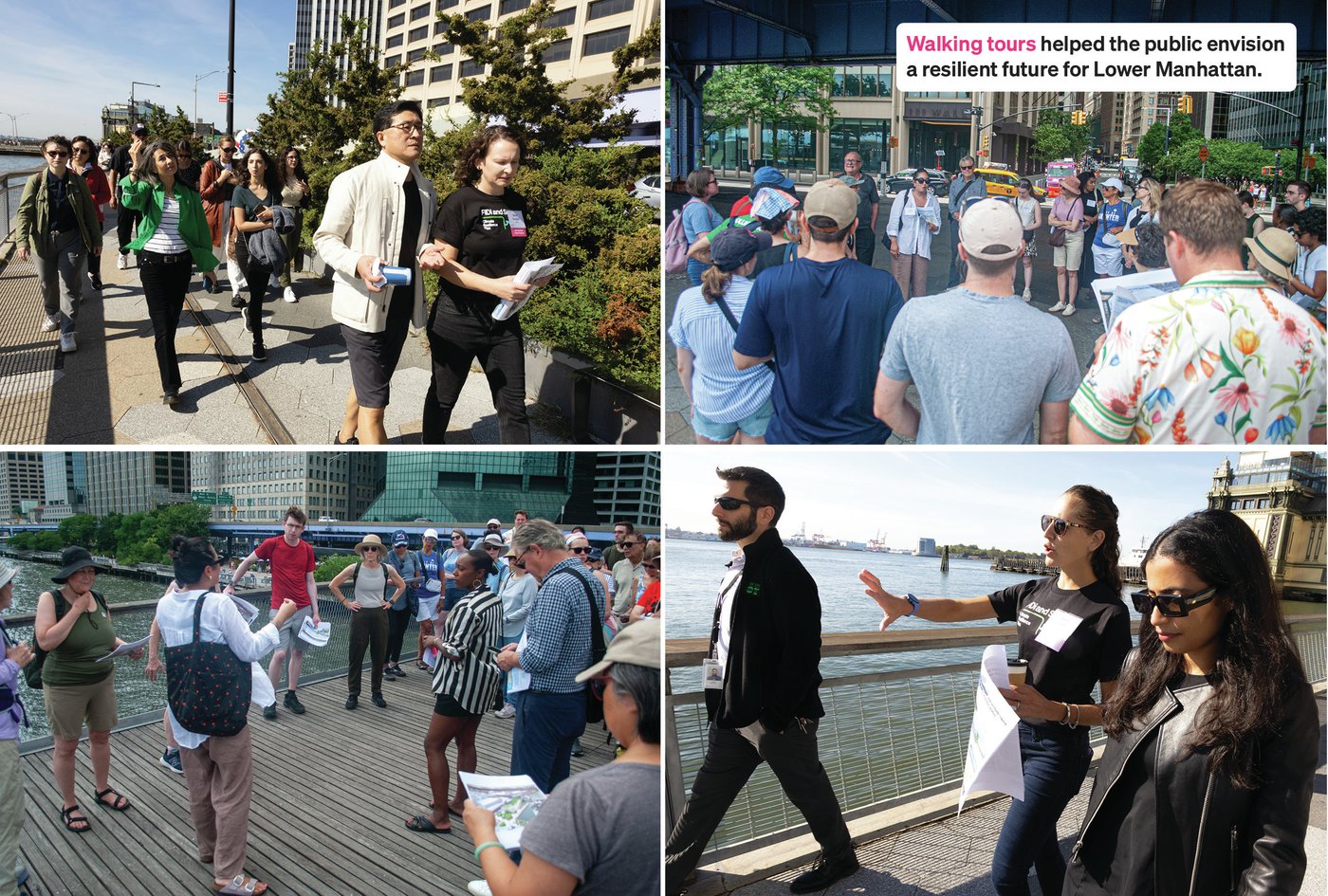
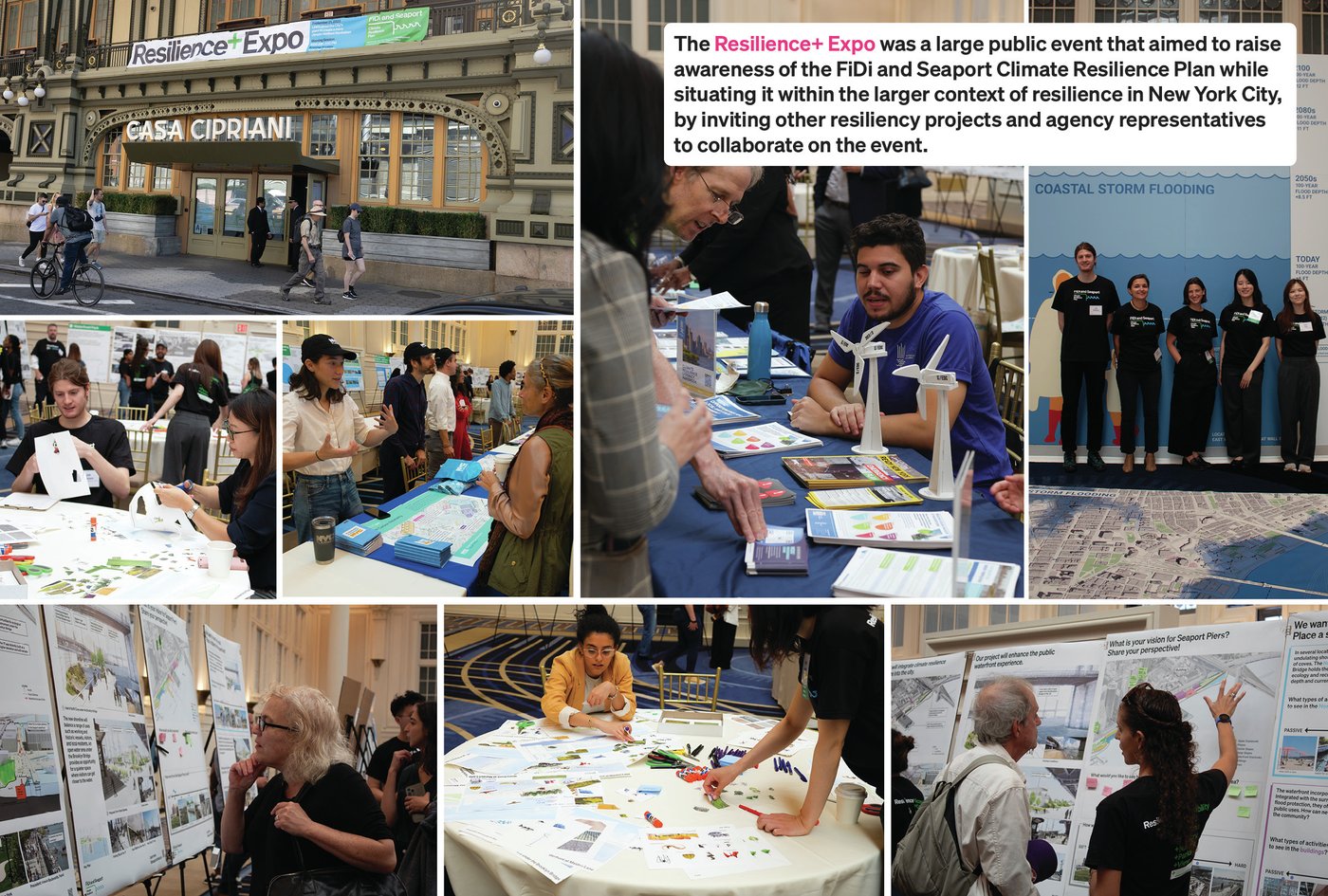
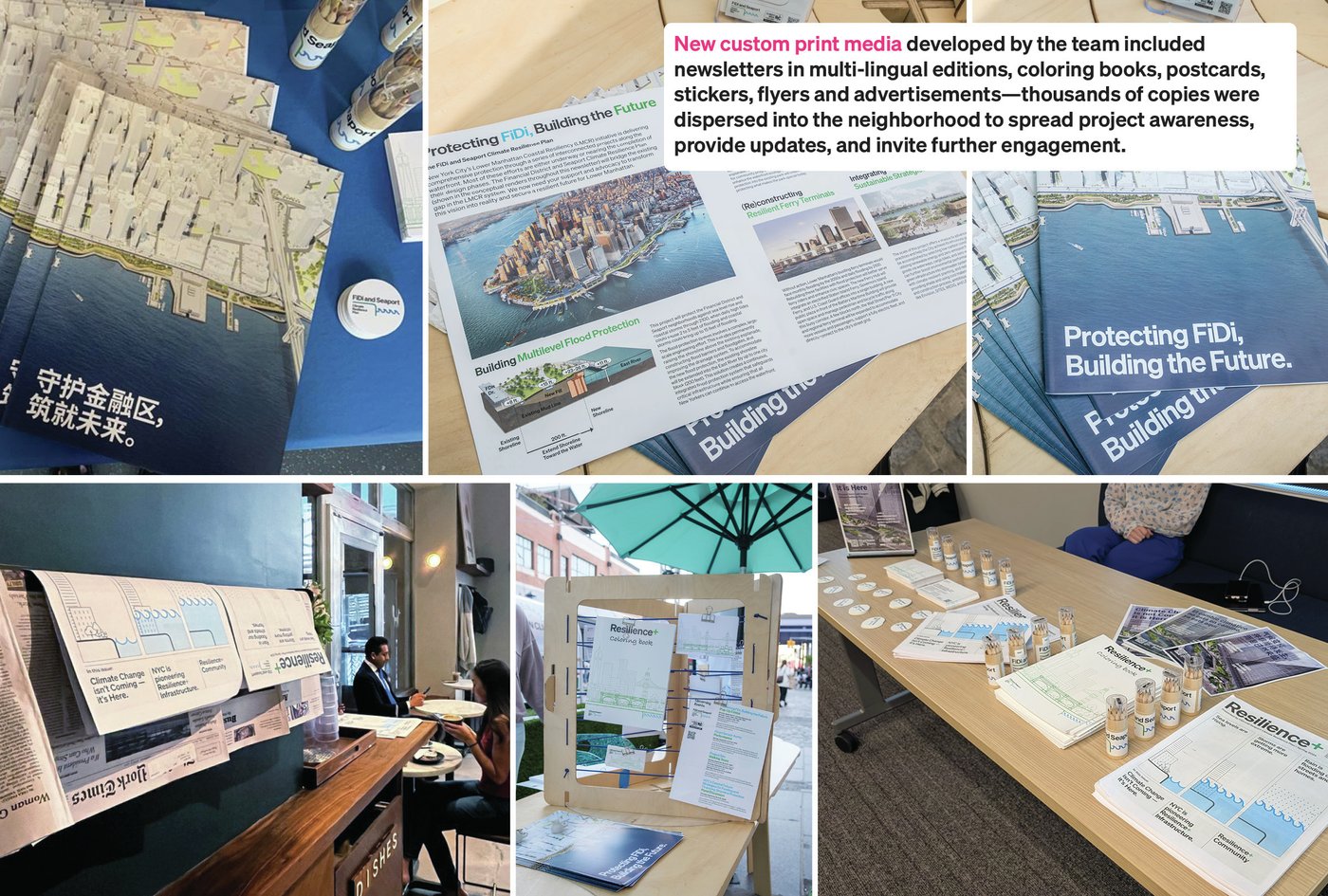
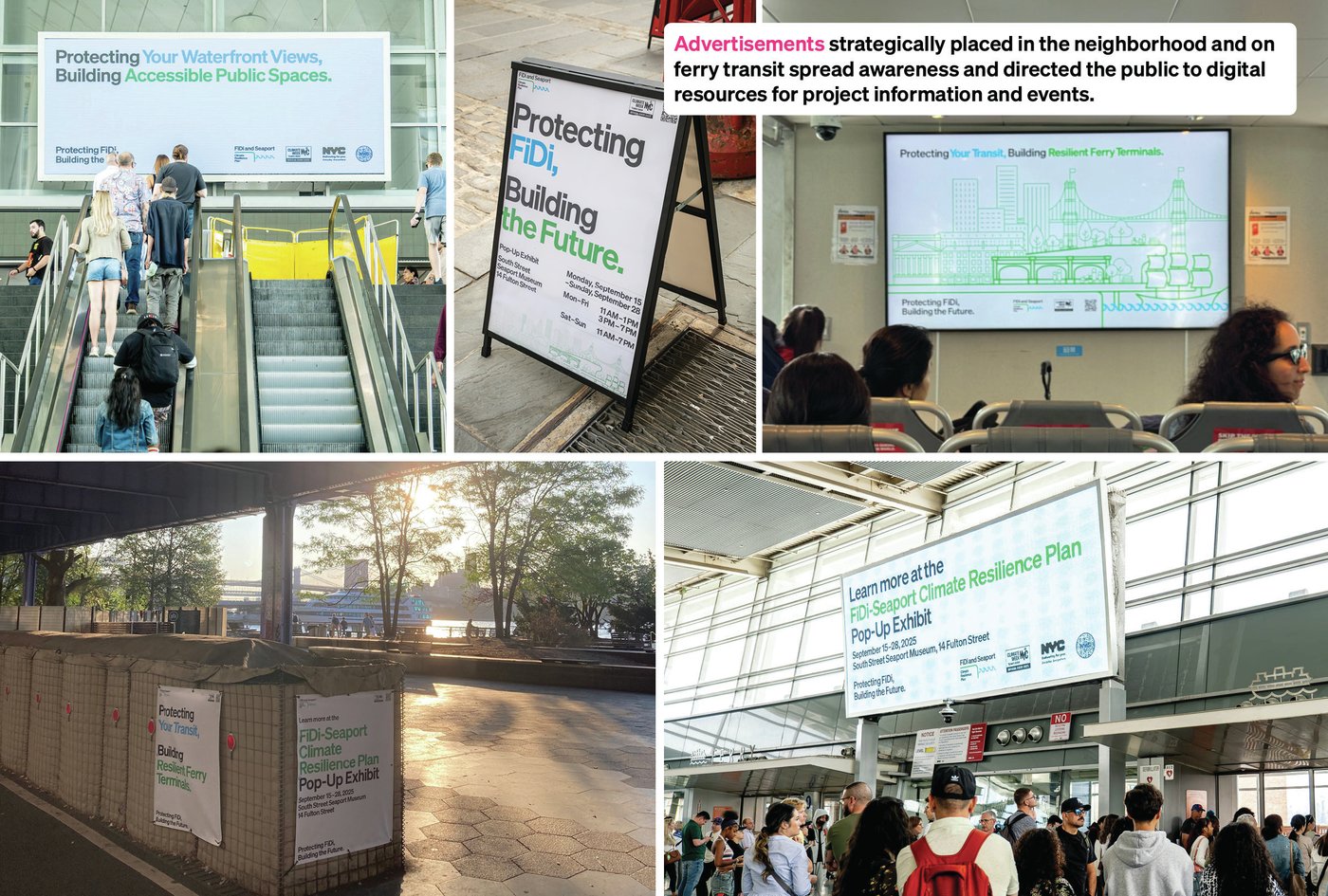
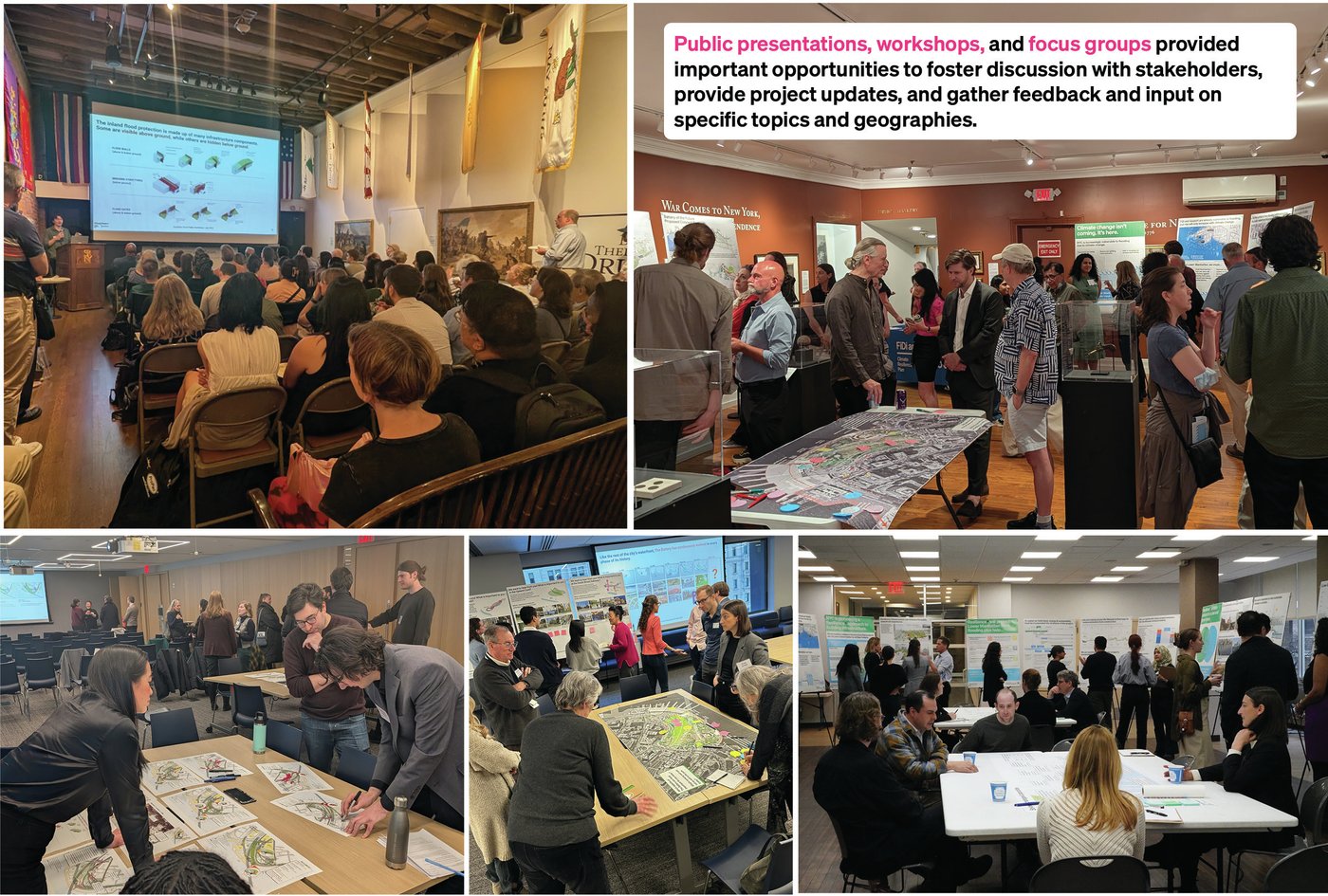
The MNLA-led multi-pronged outreach strategy employed a diversity of tools that extended well beyond the typical public project process. The expanded effort ranged from conceptualizing the outreach strategy, working with the client to articulate goals, and identifying target relationships to proposing and building the necessary tools for implementation. The diverse tactics ranged from a toolkit for community tabling events, to public workshops and presentations, walking tours, multi-lingual community newsletters, transit advertisements, youth activities, a large Resiliency+ Expo event held in a local historic venue, and a month-long public pop-up exhibit at the South Street Seaport Museum—the first exhibit of its kind to be held in conjunction with a city-led resiliency effort. Where possible, tools and events sought to include and build relationships with like-minded projects and initiatives, expanding not only the reach of the FiDi-Seaport project, but building support and understanding for NYC resiliency efforts more broadly.
Through these diverse tactics, the Plan was able to expand audience reach, grow new relationships and collaborations, and connect with thousands of additional community members and the broader public.
Using rigorous data collection, documentation, and assessment of engagement and feedback, MNLA was also able to support the client in measuring the reach and success of various outreach tactics. This allowed the team to ultimately demonstrate measurable value gains for the investment in building new communication tools and expanding the toolkit of public agency outreach methods.
See more about the Plan and MNLA’s design role by clicking here.